7 Houseplants That Make Your Bedroom Feel Calmer + Help You Sleep Better
Home · Bedroom · Sleep

These plants have real science behind them, plus tips on how to keep each one alive and who should keep them off the nightstand.
Updated July 2026 · 8 Min Read
In This ArticleThe BasicsThe ListTipsFAQsThe Takeaway
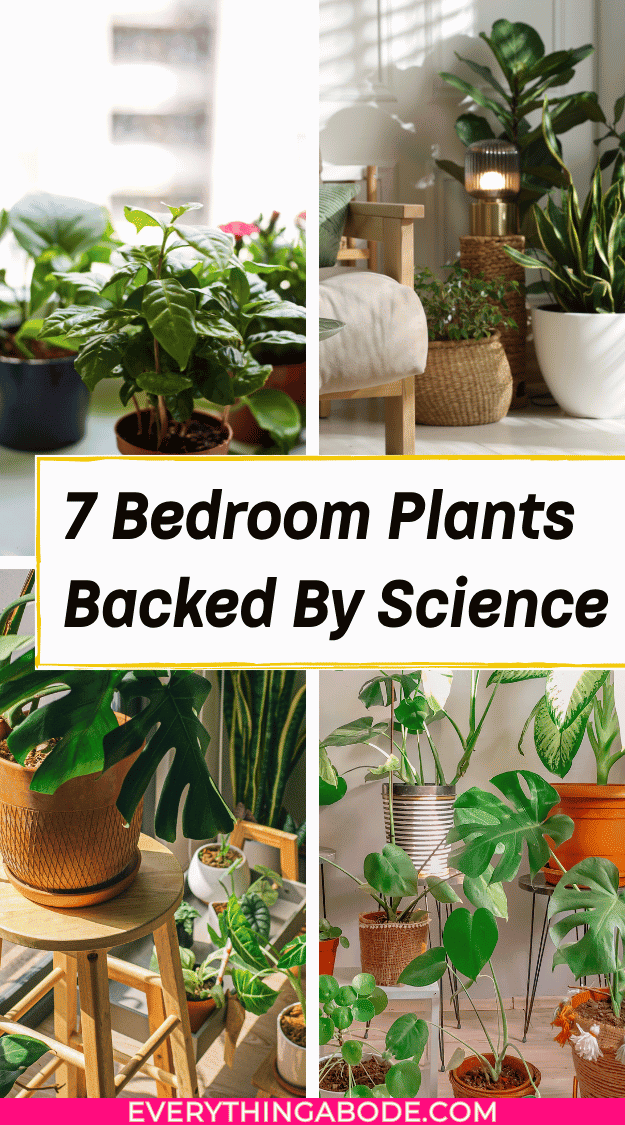
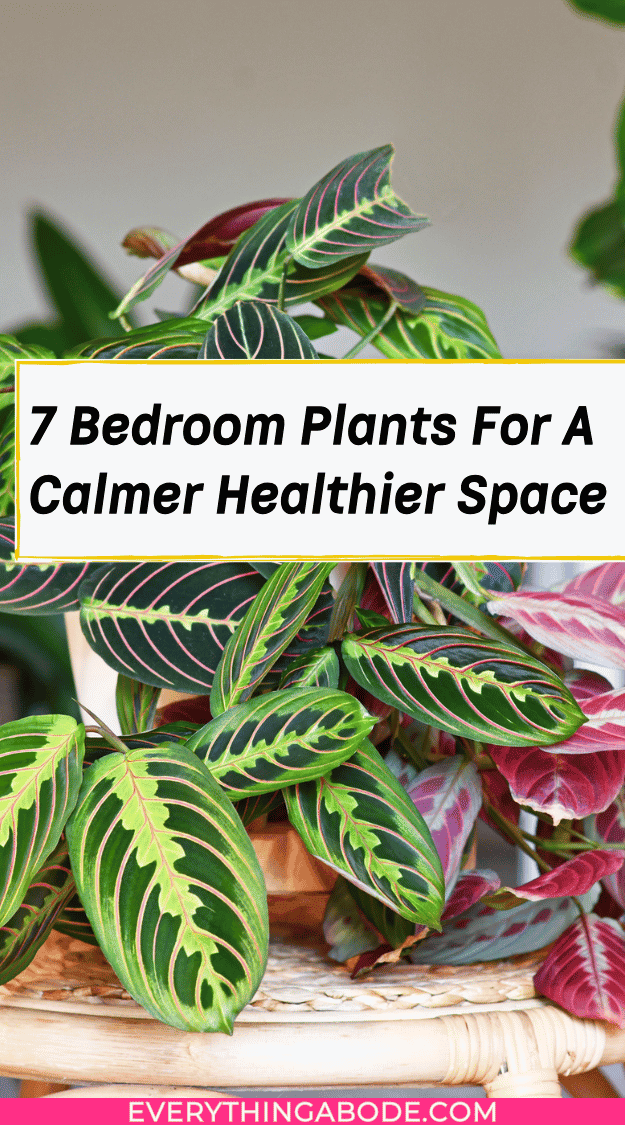
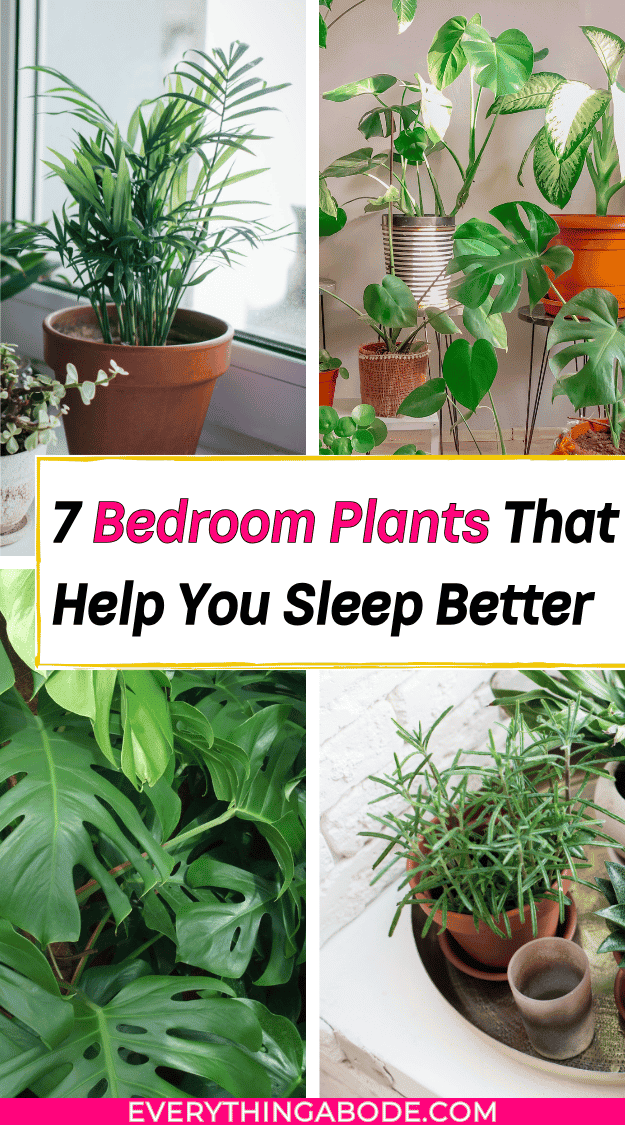
A plant in your bedroom is one of those small things that can transform a room's atmosphere.
Plants soften up the sharp edges of a room; they provide a calm place for your eyes to rest when walking into a room and make the room feel more living after an exhausting day.
Some plants (scented and non-scented) do even more. Scented plants are backed by scientific studies on improving sleep quality, and many of the tougher varieties of indoor plants will survive if you forget to water them for two weeks.
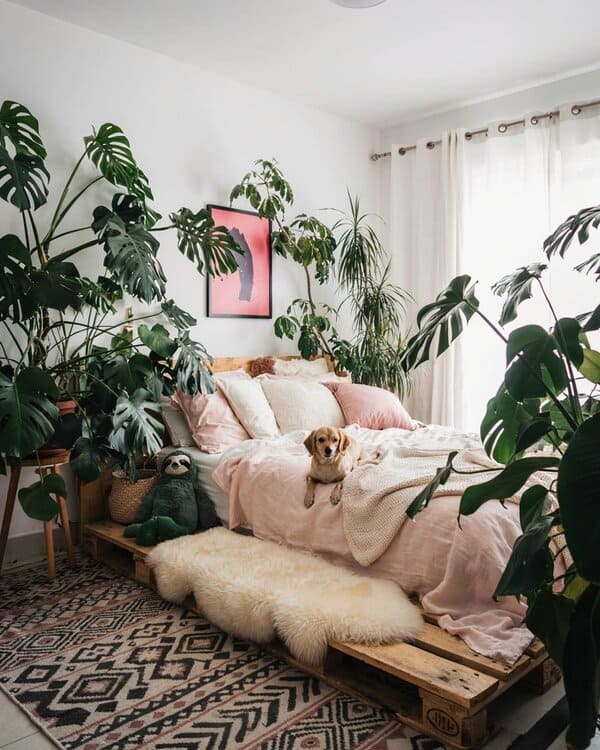
There's even a study on the calm part. When people repotted a plant instead of doing a screen task, their blood pressure dropped and they felt calmer (Lee et al., 2015).
So below is what each of these seven plants is good at, which ones help you drift off, and which ones just make a bedroom feel like yours.
Plus water, light, and a straight answer on pets and kids for each.
The Basics
What Bedroom Plants Can and Can't Do for You

Here's What to Know
- "Air-purifying" is real in a sealed lab chamber and tiny in an actual room, so treat it as a bonus, not the reason.
- Scent has the strongest sleep evidence, so the flowering plants are especially effective here.
- Most calming plants are mildly poisonous if a pet or toddler takes a bite, usually causing just an upset stomach, but they are worth planning around.
The List
Take a look at the list of the best plants to help you sleep so much better at night!
1Lavender
Lavender is the obvious first plant, but it's definitely doing wonderful things!
It's in the candle aisle, used for pillow spray, and the thing your aunt swears by.
And there's a strong reason for it...
In a study of 79 college students, the ones who got lavender on top of decent sleep habits scored better on a standard sleep-quality scale than the ones doing the habits alone (Lillehei et al., 2015).
And when researchers pooled the trials together in a recent systematic review, they found the same story.
So the cliché survived the lab, which does not happen that often.
What it's doing is slowing your heart rate and nudging your blood pressure down, which is the physical version of your shoulders dropping without you noticing.
One important fact to be aware of: the majority of this study utilizes either the oil or the fragrance from the oil (and rarely the scent of a pot of lavender sitting in front of an open window), and for a living plant to smell as strong as possible, it is necessary to brush it.
Here's What to Do:
- Place it in the brightest, sunniest window you have, as lavender requires real sunlight and tends to sulk without it.
- Water sparingly and let the soil dry out between drinks, since soggy roots are what usually kill it.
- Be honest with yourself: Lavender is tricky to keep thriving indoors long-term, so treat it like a seasonal guest, not a forever roommate.
The Move: Keep it on a bright sill across the room, not on the nightstand, so it gets light and stays out of paw range.
79People In The Lavender Trial Who Slept Better (2015 RCT)
Safety (Lavender): mildly toxic to cats and dogs (linalool). Usually, if chewed, it causes just vomiting or lethargy, but seek out medical treatment if you are worried.
2Jasmine
Jasmine is another excellent plant to help you sleep soundly in your bedroom.
This specific plant went up against lavender in a sleep study and came out ahead, and it never gets the same shelf space for some reason.
In research from Wheeling Jesuit University, people sleeping in a jasmine-scented room tossed and turned less, woke up less anxious, and did better on morning thinking tests than the people with lavender or no scent at all (as cited in Scientific Reports, 2022).
Then researchers in Germany went looking for why and found that the scent lands on the same brain receptors that some calming medications target.
So there's a real mechanism under it, not just a nice smell.
The catch is the timing. You only get the benefits when it's in bloom, and indoor jasmine tends to flower in winter, at night, which is either perfect or deeply inconvenient depending on how you look at it.
Here's What to Do:
- Put it somewhere bright with a few hours of sun so it has the energy to flower.
- Water when the top of the soil feels dry, and ease off in winter.
- Make sure you're buying true jasmine (Jasminum), not "star" or "Carolina" jasmine, which are different plants and not pet-safe.
The Move: This variety is your pet-friendly pick, so it's the safe choice if a cat or a dog shares your room with you.
20Sleepers Who Moved Less With Jasmine Than Lavender Or None
Safety (Jasmine): True, Jasmine is non-toxic to cats and dogs. This is the only fully pet-safe plant on this list.
3Gardenia
You'd never guess the difference from the last section.
That German study everyone cites for jasmine? Gardenia was the plant they tested, and here is the study for proof ->(Hatt et al., 2010).
So that heavy, sweet night smell you get from a gardenia works on the same calming receptors, which means it earns its spot by scent alone.
But you should know what you're signing up for before you bring this plant into your bedroom.
Gardenia is a diva. That means it wants bright light, steady humidity, and no cold drafts, and if you move it across the room it will drop every bud it has just to make a point.
Here's What to Do:
- Keep it within a few feet of a bright window, since it needs strong light to bloom.
- Give it steady moisture and humidity, and do not let it dry out or sit in cold drafts.
- Try not to move it around. Because gardenia drops its buds in a sulk when it's unhappy.
The Move: Only take this one on if you like fussing over a plant. It rewards attention and punishes neglect.
Safety (Gardenia): toxic to cats and dogs, mild stomach upset if eaten.
4Snake Plant
This is the famous "makes oxygen at night" one, and that part (believe it or not) is actually true!
Most plants release oxygen during the day, but snake plants use a different process (called CAM) that has them releasing oxygen after dark instead, and that is right when you're sleeping.
Most plants "breathe" throughout the daylight hours. However, CAM (Crassulacean Acid Metabolism) plants breathe only through the nighttime hours, an adaptation to save water that some desert plants have developed. As such, while most plants stop breathing by the end of each day, your snake plant continues to take in carbon dioxide and expel oxygen while you sleep.
NASA's 1989 Clean Air Study also flagged it as a strong remover of common indoor chemicals like formaldehyde and benzene.
But here's the air thing: this big 2019 research review found one plant's real-world air cleaning is a rounding error next to just cracking a window.
So keep the snake plant because it's beautiful and nearly impossible to kill, not because it'll scrub your room super clean.
Here's What to Do:
- Stick it almost anywhere, since it handles low light and bright light equally well.
- Water only every two to three weeks. Overwatering kills it faster than forgetting it.
- Wipe the leaves now and then so they can actually do their job.
The Move: This is the plant for people who kill plants, so start here if you're nervous.
10–1,000Plants Per Sq. Meter You'd Need To Match Opening A Window (2020 Review)
Safety (Snake Plant): toxic to cats and dogs, causing mild GI upset.
5Aloe Vera
An aloe plant also pulls the same night-oxygen trick as the snake plant, BUT with a first-aid bonus!
It uses that same CAM process, so it's quietly releasing oxygen overnight too.
And the gel inside is the real-deal remedy for a small kitchen burn or to soothe a sun-kissed face, so it's useful outside the bedroom too.
Here's What to Do:
- Give it a bright, sunny spot, since aloe is considered a desert plant.
- Water only once or twice a month and let the soil go completely dry first.
- Use a pot with a drainage hole. Standing water rots the roots fast.
The Move: Pair it with the snake plant on a sunny shelf for a low-effort, oxygen-at-night combo!! You'll be sleeping like a baby in no time!
Safety (Aloe Vera): toxic to cats and dogs. The inner latex is the irritating part.
6Peace Lily
The peace lily is the calm, leafy one that also happens to bump up humidity.
It made NASA's list for pulling chemicals out of the air, and it releases a bit of moisture that can take the edge off dry winter bedroom air.
It's also refreshingly honest about its needs: when it's thirsty, the whole plant droops, and it perks right back up after a drink.
Here's What to Do:
- Set it in low to medium indirect light, since direct sun scorches the leaves.
- Water about once a week when the top inch of soil is dry, and watch for the droop as your cue.
- Use filtered water if your tap runs heavy on minerals, which can brown the leaf tips.
The Move: Put it on a dresser you pass daily so the droop signal keeps you on schedule.
Safety (Peace Lily): toxic to cats, dogs, AND irritating to kids. The crystals in it cause mouth and throat burning, so this is the one to keep well away from toddlers.
7English Ivy
This is the plant for the corner that always smells a little musty.
An older allergy-conference study found English ivy sharply cut airborne mold inside sealed test containers over 12 hours, though it was a small, preliminary test rather than published research (ACAAI, 2005).
Real rooms aren't sealed containers, so the effect shrinks a lot in your actual bedroom, but ivy is still a reasonable pick for a damp or poorly ventilated corner.
Here's What to Do:
- Give it low to moderate light, which makes it great for a dim corner.
- Let the soil dry between waterings so it doesn't stay soggy.
- Let it trail from a high shelf or hanging pot, which also solves the safety problem below.
The Move: Hang it high, both because ivy loves to trail and because it needs to stay out of reach.
Safety (English Ivy): toxic to cats, dogs, and kids. Keep it up and away from anyone who chews.
Good to Know
How Many Plants Do You Actually Need in a Bedroom
The calming effect is probably better supported than anything else.
One or two plants will likely be enough. Adding additional plants won't increase your indoor air quality. So, buy the plants you'll take care of, as opposed to buying a number based on what the internet says.
If you want a few more to choose from, here is a roundup of other bedroom plants for your health and wellness separately.
Do Bedroom Plants Really Clean the Air
Barely, and it's worth saying plainly.
The lab studies that everyone cites used small sealed chambers, and a 2019 review found that the real-room effect is tiny compared to normal ventilation, even for the plants sold as air purifiers.
Plants are lovely and calming. An open window does the air part.
The Best Bedroom Plants for Low Light
If you have no other option but to only have a north-facing window or almost zero amount of natural light, then go ahead and pass on the plants that are dependent upon sunlight such as lavender and aloe.
Plants such as snake plant, peace lily, and English ivy can live under low-to-medium lighting conditions with no issues, making them likely options when looking for plants in most rentals and less lit rooms.
Using a regular grow light bulb in an ordinary lamp is very inexpensive and will accomplish way more than people think it will.
How to Keep Bedroom Plants Alive in Winter
This is extremely important and will help you save your plants and save more money!!
Many times people kill their indoor houseplants during the WINTER, but this isn't usually because they are too cold.
The main reason they will probably be dying is the DRY HEAT coming off of the RADIATORS OR HEATERS. Also, it's probable you have been watering the plants using the same SUMMER WATERING SCHEDULE. During the winter months, many of these houseplants will naturally slow down a little.
As such, reduce how often you water, move all your plants AWAY FROM HEATING SOURCES (radiators, heaters, etc.), AND GROUP YOUR PLANTS TOGETHER TO GENERATE SOME HUMIDITY.
Where to Put Plants in a Small Bedroom
Use vertical space so nothing crowds you or your pets, the same move that helps a small bedroom feel bigger in general.
A bright sill for the sun-lovers (lavender, aloe, jasmine), a high shelf or hanging pot for the trailing and toxic ones (ivy); and a dresser you walk past for the ones that signal when they're thirsty (peace lily).
Your Questions
FAQs About Bedroom Plants You Were Gonna Google Anyway 🤍
Which plant is best for sleep?
The strongest research on sleep is with lavender, and jasmine is not far behind. Both work by scent rather than air cleaning, so you want the flowering, fragrant kinds near where you sleep for the effect.
Do snake plants really give off oxygen at night?
Yes, snake plants use a process known as CAM photosynthesis that releases oxygen after dark rather than during the day. It's a small amount, so it won't change your room, but the effect is real.
Are these plants safe for cats and dogs?
Not mostly. The only fully pet-safe pick on this list is true jasmine. The others range from mildly to more irritating, so keep them high up or in rooms your pets don't share.
Can a plant actually help me sleep, or is it a placebo?
The scent effects from lavender and jasmine show up in controlled studies, so they're more than a placebo. The calming effect of just having greenery around is also measurable in blood-pressure research.
What's the easiest bedroom plant to keep alive?
The snake plant, by a mile. It handles almost any light and wants watering only every couple of weeks. Aloe is a close second if you have a sunny spot.
Do bedroom plants clean the air while you sleep?
Not in any meaningful amount. The famous studies used sealed lab chambers, and real-world air cleaning from houseplants is minimal compared to opening a window.
Is it bad to have plants in the bedroom at night?
No, this idea is an old myth. Plants release a tiny bit of carbon dioxide at night, far too little to matter, and CAM plants like snake plants and aloe actually add oxygen. It is more than fine and actually recommended!!
The Takeaway
Buy Your Bedroom Plants for the Calm, and Crack a Window for the Air
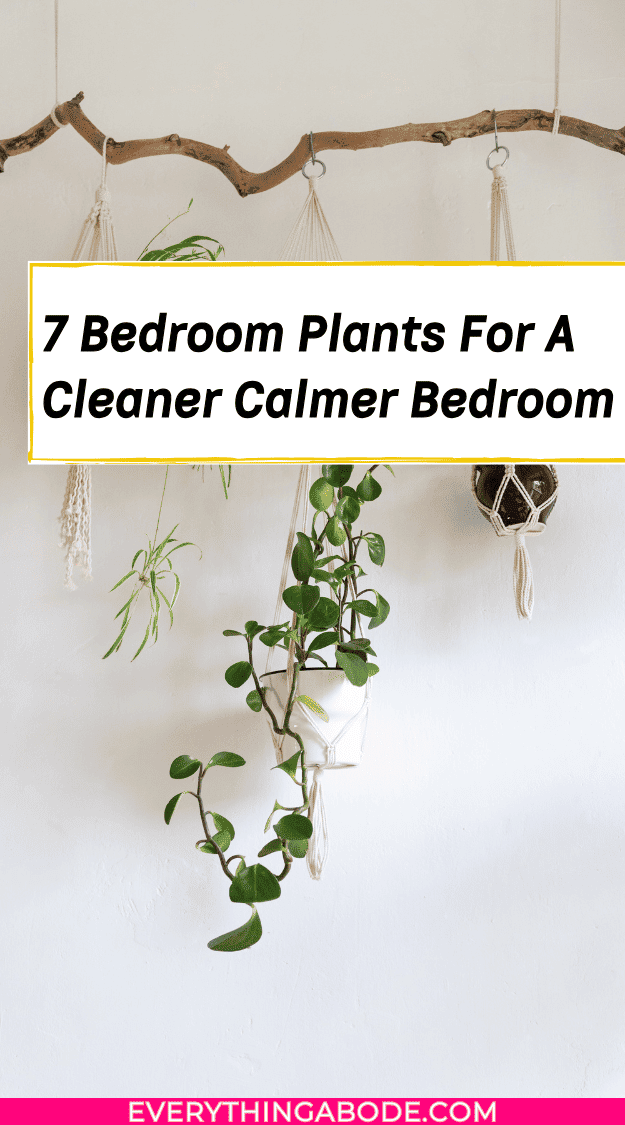
Pick for scent and calm, not for a clean-air miracle that isn't coming.
Place lavender or jasmine by the bed, a snake plant or aloe for low effort, and ivy in the damp corner.
Keep the toxic ones up high, crack a window for the actual air, and let the plants do what they're truly good at, which is making the room feel like somewhere you want to slow down, the heart of any good botanical bedroom.
Written by Rebecca Lauren for Everything AbodeI share cozy-home ideas, easy home hacks (that I've tested!!), and slow-living tips that I've researched and fact-checked before they reach you. When I'm not researching, writing, or making content, you can find me at the closest beach with my most precious and beautiful dog, drinking my daily half-caf, three-cream coffee from a drive-through.
PS – Which one of these have you already tried, and did it survive the first month… be honest. I'd genuinely love to know.

Medical DisclaimerThis article is for general information only and isn't medical advice. If you have allergies, asthma, or pets and small children at home, check plant safety with your vet or doctor (the ASPCA plant database is a good reference) before bringing new plants indoors.


Author: Everything Abode
Welcome to Everything Abode, your daily inspiration for every activity at home! Our goal is to inspire you to live an elegant and chic lifestyle from the comfort of your home. We'll help you express yourself through authentic style, aesthetic beauty, and stylish home decor.Subscribe to get the BEST HOME TIPS straight to your inbox!
 You'll get insider advice that is tested to create the BEST home life ever!